The most important goals of the rollout — from real-time stock and theft prevention to purchasing, margin, EDI, fulfilment and finance/reporting. A short field guide of what an ERP actually has to deliver day-to-day.
As mentioned earlier, this project has key goals we want to achieve. Let me just walk through the most important ones with a few notes:
Stock management
Several factors matter here at once. The most important one is, of course, that having a reliable stock level at the press of a button delivers value I won’t go into here in detail. Anyone running a brick-and-mortar store and an online shop from a single warehouse has to be able to trust their stock. In the past it wasn’t unusual for items to be sold at the till and that information to reach the webshop only after a significant delay. That led to avoidable purchases in the shop and the corresponding correction bookings, which were a major hassle.
Cross-channel returns (bought online — returned in the store) should also be possible.
Theft
It’s no secret that shoplifting is a serious topic in retail. It was important to us to use partial stocktakes with a handheld scanner to reconcile ERP and actual stock quickly.
Purchasing & Order Management
Seasonal planning (pre-order, order budgets per supplier/collection)
Automated replenishment via minimum stock levels / reorder points
Goods-in checks against the order (target/actual) — I’ll come back to this in a later post, because we’re using an AI tool here that delivers an enormous simplification.
Pricing & Margin
Capture purchase prices, freight, and customs cleanly per article → real contribution margins per piece/collection.
With 2,500 articles, it’s nearly impossible to identify the winners and losers. The goal is for unbiased statistics — free from gut feeling — to deliver the data that drives order management.
Manage pricing tiers, campaigns, and discounts centrally (sale, markdown strategy) — none of this is practical without an ERP without massive overhead.
EDI
Of our 100+ suppliers, roughly 10 percent are EDI-capable. We’ll be focusing on this much more going forward, because every article we don’t have to push into the ERP or the shop with manual labour increases margin. Spoiler: for a retailer without significant IT know-how, EDI is a real challenge at the start. You absolutely need support here, because the suppliers have signed up with different service providers, which means different transmission paths and protocols. But because the upside clearly outweighs the effort, running an ERP without using EDI is leaving potential on the table.
Order & Shipping Fulfilment (Webshop)
Automated pick / pack / ship processes, label printing, tracking
Carrier integration (DHL, DPD, GLS …)
Faster delivery times, fewer errors. The latter is the decisive point. Fewer errors mean more time for the customer.
Finance & Reporting
Handover to accounting / DATEV
Reports: sell-through rates, stock turn, winners/losers, sell-through per collection. Until now these reports were only possible with significant effort — if at all.
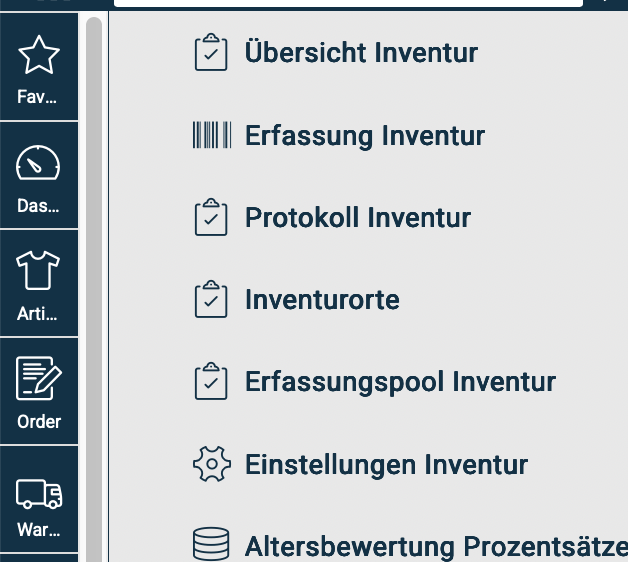
Stocktaking much faster and more accurate (ideally with handheld scanner / barcode). Until now this process was only manageable with high staffing levels, paper lists, and a high error rate. With scanner support, stocktakes are doable in a fraction of the time.
— ◆ —
Leave a Reply
You must be logged in to post a comment.